

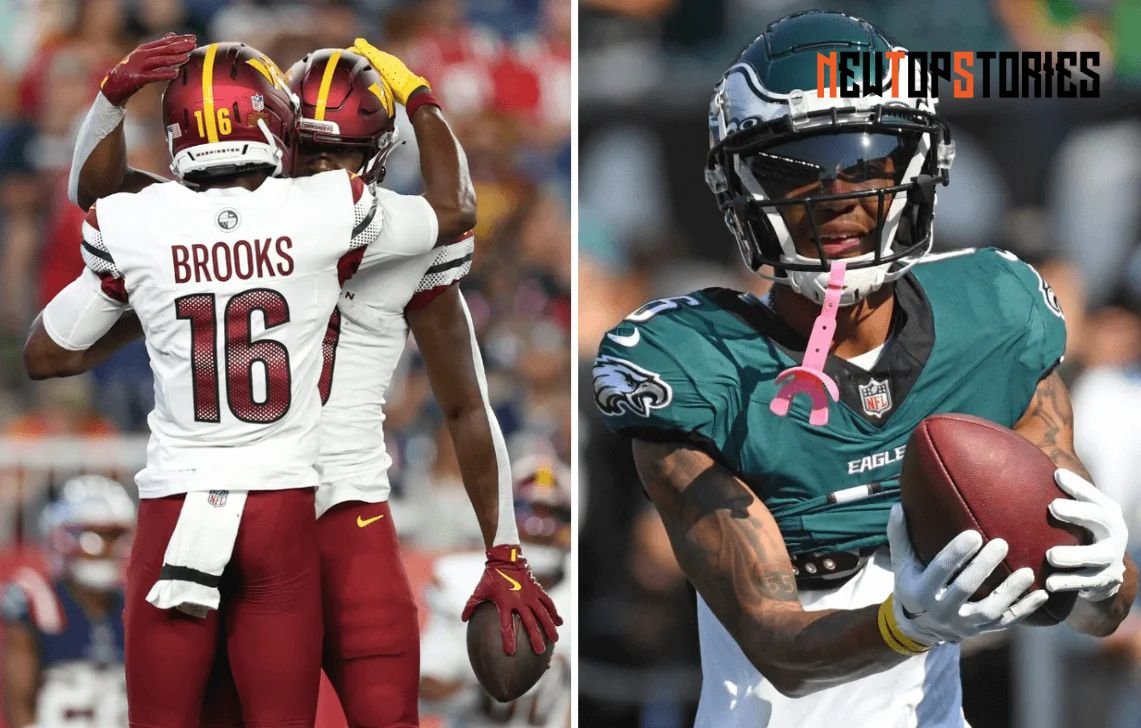
A rivalry built on big moments and bigger swings — that’s the best way to describe the Washington Commanders vs Philadelphia Eagles match player stats story. Over the past year, these teams produced two unforgettable games: Washington’s late-December comeback classic and Philadelphia’s statement win in the NFC Championship. Those two contests — December 22, 2024 (Commanders 36–33) and January 26, 2025 (Eagles 55–23) — give us a clear window into how schemes, stars, and split-second decisions shaped the outcome.
- The Setup
- Game Context
- Quarterbacks
- Running Game
- Pass Catchers
- Pass Rush and Protection
- Third Down and Fourth Quarter
- Red Zone Efficiency
- Turnovers and Field Position
- Special Teams
- Standout Players
- Key Team Stats
- What the Numbers Reveal
- How to Read the Next Meeting
- Rivalry History
- Summary and Takeaways
- Final Thoughts
- FAQs
- Who had the best performance in the Washington Commanders vs Philadelphia Eagles match?
- How did the Commanders manage to beat the Eagles in their December meeting?
- \What made Philadelphia’s offense so dominant in the rematch?
- Which player stats were most important in deciding both games?
- What can we expect in the next Commanders vs Eagles matchup?
The Setup
Washington’s home win in late 2024 ended a long Eagles winning streak and confirmed rookie Jayden Daniels as more than just a spark — he was a closer. A month later, Philadelphia flipped the script with a record-setting offensive outburst led by Jalen Hurts and Saquon Barkley behind an elite offensive line. These games serve as bookends to explain the matchup’s rhythm, personnel pivots, and the player stats that defined both results.
Game Context
December 22, 2024 (Washington 36, Philadelphia 33): Washington rallied with a 22-point fourth quarter, winning on a last-second touchdown. The statistical footprint shows Washington’s balance: controlling the ball for over 36 minutes, executing on third downs, and finishing drives efficiently.
January 26, 2025 (Philadelphia 55, Washington 23): The Eagles converted early pressure into points and never let go. They scored seven rushing touchdowns and broke the game open with red-zone efficiency, setting a conference championship scoring record and proving how dominant their trenches can be.
Quarterbacks
Jayden Daniels (Washington): In the December win, Daniels delivered a career performance — five touchdown passes and perfect timing in critical drives. He managed pressure, extended plays, and found open receivers in high-leverage moments. In the January rematch, the story flipped. Philadelphia’s pass rush collapsed protection, forcing Daniels into hurried reads and turnovers. His stat line suffered, but the flashes of composure under duress still showed his growth.
Jalen Hurts (Philadelphia): Hurts’ NFC title game performance was vintage dual-threat football — three rushing touchdowns and complete command of the red zone. His legs forced Washington’s defense to hesitate, while his poise turned broken plays into highlight moments. Even without massive passing yard totals, Hurts’ influence on coverage and spacing was unmistakable.
Running Game
Philadelphia: Saquon Barkley’s three-touchdown game in January illustrated the power of balance. Philadelphia blended inside zone and quarterback option runs to stretch Washington’s defense horizontally and vertically. When Hurts faked a keeper, Barkley hit the open lanes with precision, proving why this backfield is one of the most dynamic in football.
Washington: The Commanders’ December rushing attack was all about timing and control. They didn’t pile up massive yardage, but they ran when it mattered most. Short-yardage conversions kept drives alive and allowed Daniels to set up play-action shots. Washington’s ground game wasn’t flashy — it was functional and perfectly complementary.
Pass Catchers
Eagles: A.J. Brown was the gravitational pull in Philadelphia’s offense. His touchdown catches came from mismatches he created through sheer strength and body positioning. But the unseen value was in how he opened lanes for DeVonta Smith and Dallas Goedert underneath. Even without monster numbers, Brown’s presence dictated Washington’s coverage every snap.
Commanders: December’s win showcased team balance. Instead of leaning on one star, Daniels spread targets to multiple receivers, keeping the Eagles’ defense guessing. That final touchdown drive was a masterclass in spacing — quick slants, sharp out routes, and the patience to wait for the open man.
Pass Rush and Protection
Philadelphia’s defensive line dominated the January meeting. Their simulated pressures confused Washington’s blocking schemes, producing breakdowns across the interior. The result: collapsed pockets, short fields, and snowballing momentum.
Washington’s pass rush, meanwhile, thrived in December when it forced Hurts into long-yardage downs. Their front four created just enough disruption to limit explosive plays. However, in January, once the Eagles established the run, Washington’s rush lanes opened wide and discipline eroded.
Third Down and Fourth Quarter
December’s numbers were decisive: Washington converted 7 of 13 third downs, while Philadelphia went just 3 of 16. That efficiency difference extended drives and built late-game rhythm. In January, the Eagles flipped the script, staying out of third-and-long situations entirely thanks to early-down success.
Red Zone Efficiency
The red zone told the story of both games. Washington favored quick throws and decisive quarterback reads in December, turning efficiency into touchdowns. The Eagles leaned on raw power and quarterback runs in January, pounding out seven rushing touchdowns. In tight spaces, Philadelphia’s offensive line proved unstoppable.
Turnovers and Field Position
In December, Washington protected the football, while the Eagles gave away key possessions. In January, the Commanders’ turnovers provided Philadelphia with short fields that turned into immediate touchdowns. The swing in turnover margin alone accounted for nearly 21 points of difference between both matchups.
Special Teams
Special teams played a subtle but important role. Washington’s punting and coverage units in December kept Philadelphia pinned deep, while in January, the Eagles flipped field position repeatedly. Those hidden yards compounded over time, creating favorable situations for the Eagles’ offense.
Standout Players
Saquon Barkley: Three touchdowns and relentless consistency in the championship game. He blended patience with burst and punished over-pursuing linebackers.
Jalen Hurts: Three rushing scores and elite red-zone control. His decision-making on option plays showcased why he remains one of the most efficient quarterbacks in situational football.
Jayden Daniels: Five passing touchdowns in December — a rookie statement game that proved he could elevate the entire offense.
A.J. Brown: Constant mismatch, even without gaudy stats. His influence extended far beyond the box score.
Key Team Stats
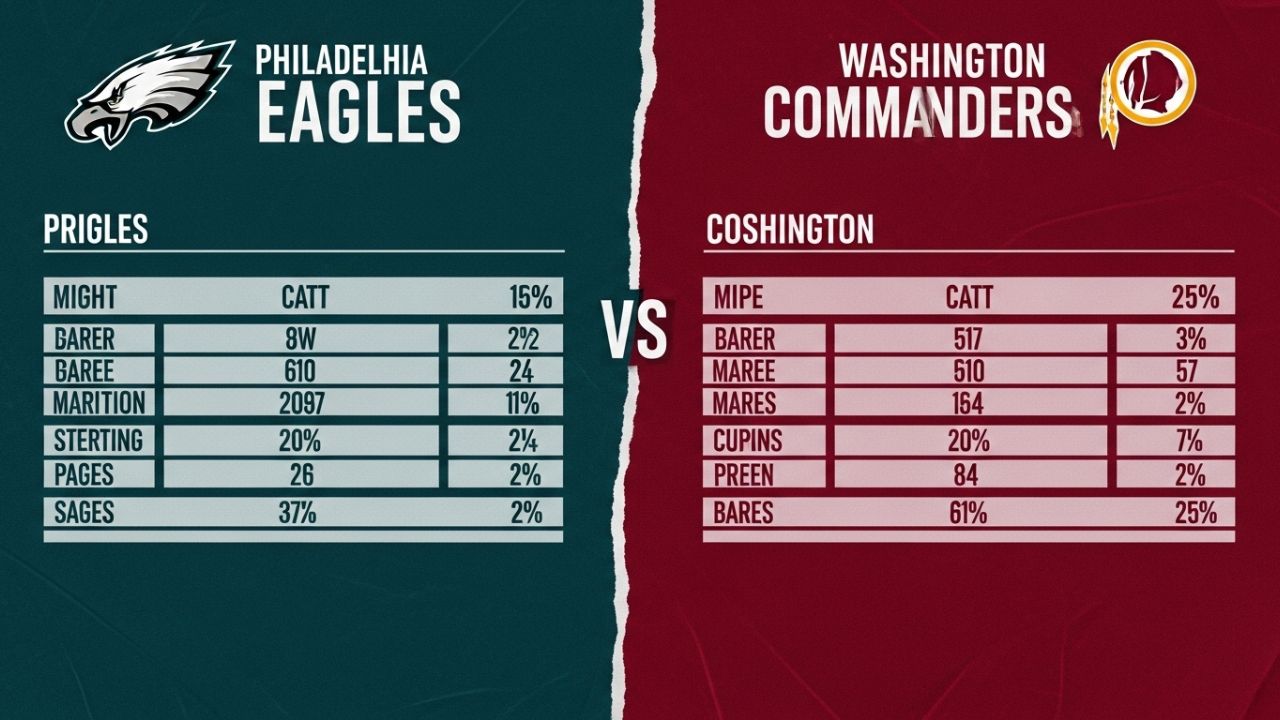
December 22, 2024 – Washington 36, Philadelphia 33
- Third Downs: PHI 3/16, WSH 7/13
- Time of Possession: PHI 23:42, WSH 36:18
- Total Yards: PHI 338, WSH 368
January 26, 2025 – Philadelphia 55, Washington 23
- Rushing Touchdowns: PHI 7
- Combined Hurts + Barkley TDs: 4 rushing, 1 passing
- Offensive Dominance: Philadelphia averaged over 6 yards per carry
What the Numbers Reveal
Line of Scrimmage: Games were won and lost in the trenches. When Washington’s line controlled tempo, they won; when Philadelphia’s front dominated, the game was over early.
Quarterback Mobility: Both Hurts and Daniels use their legs as multipliers. Hurts’ designed runs tilt the field. Daniels’ scrambles turn broken plays into first downs.
Third Down Control: Sustaining drives equals control. The team that won third down won both games.
Turnover Differential: Turnovers defined January’s blowout just as ball security defined December’s upset.
How to Read the Next Meeting
For future games, keep an eye on:
- Rush Success Rate: If Philadelphia dominates early downs, expect another red-zone clinic.
- Third-Down Distance: Washington must stay under six yards per conversion attempt.
- Pressure Without Blitz: Both teams rely heavily on four-man rushes; whoever wins that battle controls the pace.
- Field Position: Short fields change everything — January’s result proved it.
Rivalry History
The Commanders–Eagles rivalry stretches back decades and is filled with unforgettable moments. From the bruising contests of the late 20th century to today’s fast-paced duels, these matchups remain among the most unpredictable in football. Washington’s December win showed resilience and hope for a young team, while Philadelphia’s January dominance reaffirmed their championship pedigree.
Summary and Takeaways
This two-game stretch highlighted how quickly momentum shifts in the NFL. Washington’s December victory was about rhythm, patience, and balance. Philadelphia’s January blowout was about raw power, discipline, and trench warfare. Both games, however, reinforced one timeless truth — the Washington Commanders vs Philadelphia Eagles match player stats reveal not just numbers, but the story of how modern football is played.
Final Thoughts
Each meeting between these rivals carries its own texture — unpredictable, emotional, and electric. The numbers may tell the story, but it’s the human moments within those stats that make this rivalry one of the NFL’s most captivating. Whether it’s Jayden Daniels’ emergence or Jalen Hurts’ relentless drive, the matchups remind us that player stats are more than just figures — they are proof of preparation, resilience, and the pursuit of perfection.
Next season’s rematch can’t come soon enough.
FAQs
Who had the best performance in the Washington Commanders vs Philadelphia Eagles match?
In the latest matchup, Jalen Hurts and Saquon Barkley delivered standout performances for the Eagles, combining for multiple rushing touchdowns. On the other side, Jayden Daniels impressed earlier in the season with five passing touchdowns during Washington’s comeback victory.
How did the Commanders manage to beat the Eagles in their December meeting?
Washington controlled the clock, converted on third downs, and limited turnovers. Their balanced attack allowed Jayden Daniels to execute confidently, while the defense kept the Eagles off rhythm in crucial late-game drives.
\What made Philadelphia’s offense so dominant in the rematch?
Philadelphia’s success came from complete control at the line of scrimmage. Their run game—led by Barkley and Hurts—overpowered Washington’s front, producing seven rushing touchdowns and a near-perfect red-zone conversion rate.
Which player stats were most important in deciding both games?
The most decisive stats were third-down efficiency, turnover margin, and rushing success rate. The team that managed those three areas effectively won both games, showing how execution often outweighs raw yardage totals.
What can we expect in the next Commanders vs Eagles matchup?
Fans can expect another physical, fast-paced game. Washington will aim to protect their young quarterback and stay balanced, while Philadelphia will continue leaning on their powerful run game and experienced offensive line to dictate tempo.
You May Also Read: Peaceful African American Wednesday Blessings to Lift Your Spirit