

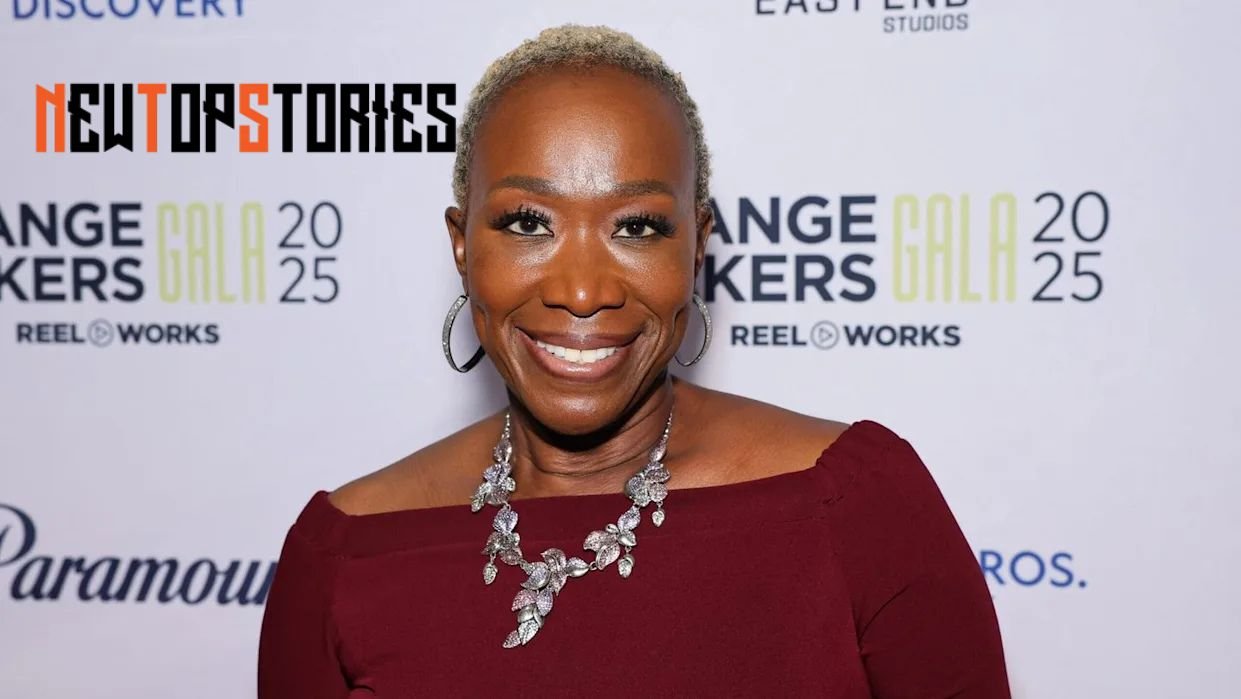
Joy Reid fired from her high-profile role at MSNBC became one of the most discussed media developments of the year. The decision sparked intense debate across television news, political commentary, and social media, raising deeper questions about editorial freedom, corporate strategy, and the future of opinion-driven journalism. As a prominent primetime host with a strong and loyal audience, her departure was never going to be a quiet programming change. It quickly turned into a national conversation about power, voice, and influence in modern media.
- Introduction — Why This Story Captured National Attention
- Who Joy Reid Is and Why Her Voice Mattered
- What Happened: How the Decision Unfolded
- The Network’s Position and Internal Context
- Immediate Media Fallout
- Reaction From Journalists and Media Analysts
- Public Response and Social Media Debate
- Political and Cultural Reactions
- The Business Side of the Decision
- Joy Reid’s Departure and Personal Response
- What This Means for Her Future
- What This Story Reveals About Modern Media
- Lessons for Networks and Journalists
- Conclusion — Beyond the Headline
- FAQs
- You May Also Read
This article takes a close, well-researched look at what happened, how the media and public reacted, and why the story continues to resonate far beyond one television network.
Introduction — Why This Story Captured National Attention
When news broke that Joy Reid fired from MSNBC, it immediately drew attention because of her visibility and cultural impact. Her show, The ReidOut, was not just another cable news program; it was a space where politics, race, and social issues were discussed with urgency and conviction. For many viewers, Reid represented a rare and influential voice in primetime television.
The sudden end of her show raised immediate questions. Was this purely a business decision, or did it reflect deeper tensions within cable news? The lack of detailed explanation from the network only intensified public curiosity and speculation.
Who Joy Reid Is and Why Her Voice Mattered
Joy-Ann Reid built her career through years of political reporting, commentary, and analysis. She transitioned from journalism and blogging into mainstream television, eventually becoming one of the most recognizable faces in American cable news. Her rise to a primetime slot was widely seen as a milestone, particularly because she brought perspectives that were often underrepresented on major networks.
Her work consistently focused on U.S. politics, civil rights, and cultural identity. Supporters valued her willingness to challenge powerful figures and institutions, while critics argued that her commentary blurred the line between journalism and activism. Regardless of viewpoint, few disputed that her presence mattered.
What Happened: How the Decision Unfolded
The announcement that Joy Reid fired came as part of a broader programming shake-up at MSNBC. Network leadership confirmed that The ReidOut would be canceled, ending her primetime run. The decision coincided with new management priorities and a wider effort to restructure the evening lineup.
Notably, the network did not point to a single incident or controversy as the cause. Instead, the move was framed as strategic, tied to ratings performance, audience shifts, and long-term programming goals. This absence of a clear explanation left room for multiple interpretations.



The Network’s Position and Internal Context
MSNBC described the change as part of an effort to refresh its programming and respond to evolving viewer habits. Cable news audiences have been shrinking overall, and networks face increasing pressure to adapt to digital competition and fragmented attention spans.
From a corporate perspective, primetime slots are valuable real estate. Decisions about who occupies them are rarely personal, even when they feel that way to viewers. Still, the firing of such a high-profile host inevitably raised questions about how much room remains for strong, opinionated voices on traditional television.
Immediate Media Fallout
Coverage of the story varied sharply across outlets. Some framed the firing as a routine business decision driven by ratings and strategy. Others treated it as a major cultural moment, highlighting Reid’s final broadcasts and the emotional tone of her departure.
Editorial columns and media analysis pieces debated whether her exit signaled a retreat from outspoken commentary or simply reflected changing formats in cable news. The sheer volume of coverage showed that this was not a minor industry adjustment, but a story with broader implications.
Reaction From Journalists and Media Analysts
Within journalism circles, reactions were mixed but intense. Some analysts argued that cable news is moving away from single-host opinion shows toward panel formats and discussion-driven programming. Others expressed concern that strong, distinctive voices are increasingly vulnerable to corporate risk calculations.
Several commentators pointed out that high-profile hosts often become lightning rods, attracting both loyalty and backlash. In such an environment, networks may prioritize predictability over personality, even if it means losing influential figures.
Public Response and Social Media Debate
Online reaction to Joy Reid fired was swift and polarized. Supporters described the decision as disappointing and troubling, viewing it as a loss for representation and critical discourse. Many shared clips from her past broadcasts, emphasizing the issues she championed and the conversations she sparked.
At the same time, critics welcomed her exit, arguing that her style was too divisive or ideological. These opposing reactions revealed how deeply cable news has become intertwined with political identity. The story quickly moved beyond television into a broader debate about media trust and bias.

Political and Cultural Reactions
Political figures also weighed in, underscoring the significance of Reid’s role. Some praised the network’s decision, while others criticized it as a concession to pressure and controversy. These responses highlighted how cable news hosts can become political actors in their own right, influencing and provoking those in power.
Culturally, the firing sparked conversations about who gets a platform and under what conditions. For many observers, the moment symbolized the tension between corporate media structures and the desire for unapologetic, values-driven commentary.
The Business Side of the Decision
From a business standpoint, cable news faces undeniable challenges. Viewership has declined as audiences turn to streaming services, podcasts, and social media for political content. Advertising revenue is under pressure, and networks must constantly justify their programming choices.
In this context, the decision that Joy Reid fired may reflect broader industry trends rather than individual performance alone. Networks are increasingly cautious, seeking formats that minimize risk and maximize appeal across divided audiences.
Joy Reid’s Departure and Personal Response
Reid’s final appearances were marked by visible emotion. She spoke openly about her commitment to the issues she covered and expressed concern for her team, many of whom also lost their positions with the show’s cancellation. Her words resonated with viewers who felt a personal connection to her work.
Following her exit, Reid made it clear that she did not regret the substance of her commentary. Instead, she framed her departure as a moment of transition rather than an ending.
What This Means for Her Future
Being removed from a cable network does not necessarily end a media career. In today’s landscape, prominent voices can build large audiences through digital platforms, independent shows, and publishing ventures. Reid has already demonstrated an ability to connect with audiences beyond traditional television.
Her firing may ultimately give her greater freedom to speak without the constraints of network television. For many media figures, leaving cable news opens doors rather than closes them.
What This Story Reveals About Modern Media
The Joy Reid fired episode highlights several realities of contemporary media. First, corporate strategy often outweighs individual influence, no matter how prominent the host. Second, political polarization makes opinion-driven programming both powerful and risky. Finally, audiences are no longer dependent on television alone, reshaping how influence is measured.
These forces are redefining what success looks like in journalism and commentary.
Lessons for Networks and Journalists
For networks, the situation underscores the importance of clarity and transparency. Abrupt decisions without detailed explanations can damage trust and fuel speculation. For journalists and commentators, it serves as a reminder that visibility comes with vulnerability in an industry shaped by constant change.
Conclusion — Beyond the Headline
The story of Joy Reid fired is not just about one host losing a primetime slot. It reflects deeper shifts in media power, audience behavior, and corporate decision-making. Whether viewed as a strategic move or a cultural loss, the moment captures the uncertainty facing cable news today.
FAQs
Why was Joy Reid fired from MSNBC?
The network described the decision as part of a broader programming and strategic shift. While no single reason was publicly detailed, the move aligned with changes in leadership, audience trends, and primetime restructuring.
Did Joy Reid’s show end because of low ratings?
Ratings were widely discussed, but they were not cited as the sole factor. Like much of cable news, her show operated in a challenging environment where overall viewership patterns are changing across the industry.
How did the public react to Joy Reid being fired?
Public reaction was deeply divided. Supporters expressed disappointment and concern about representation and media voices, while critics viewed the decision as justified, reflecting long-standing disagreements with her commentary style.
What did Joy Reid say after her departure?
Joy Reid acknowledged the emotional impact of the decision and emphasized that she stood by the work she had done. She also highlighted the importance of the issues her show covered and expressed gratitude to her audience and team.
What could be next for Joy Reid after leaving cable news?
Many expect her to continue through digital media, podcasts, writing, or independent platforms. In today’s media landscape, leaving television does not necessarily mean losing influence or relevance.
You May Also Read
Farewell to Life on Earth: A Thoughtful Look at Humanity’s Legacy